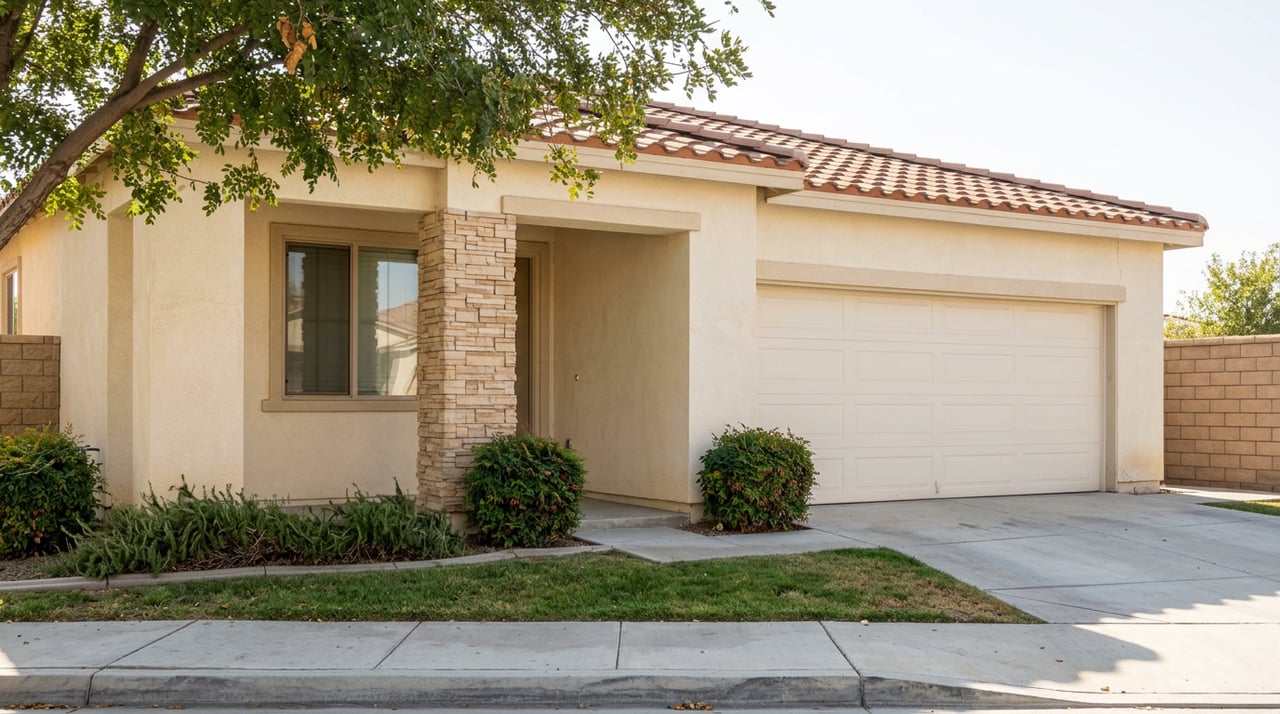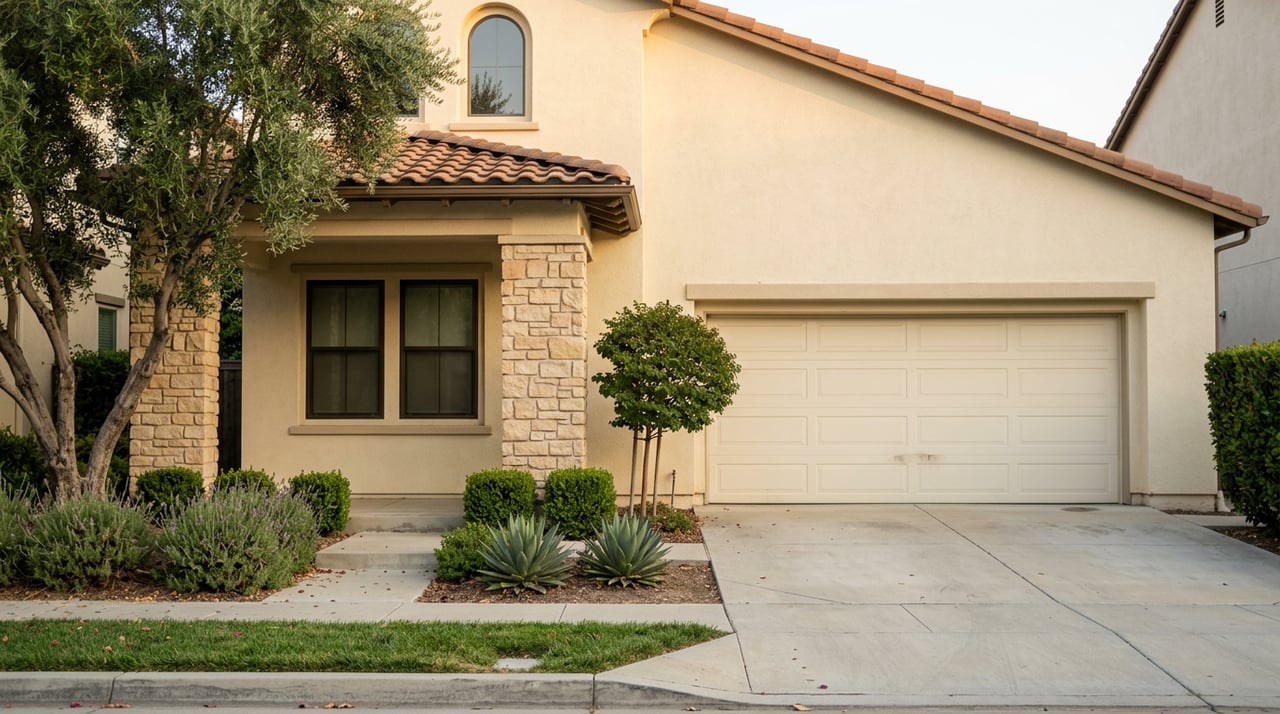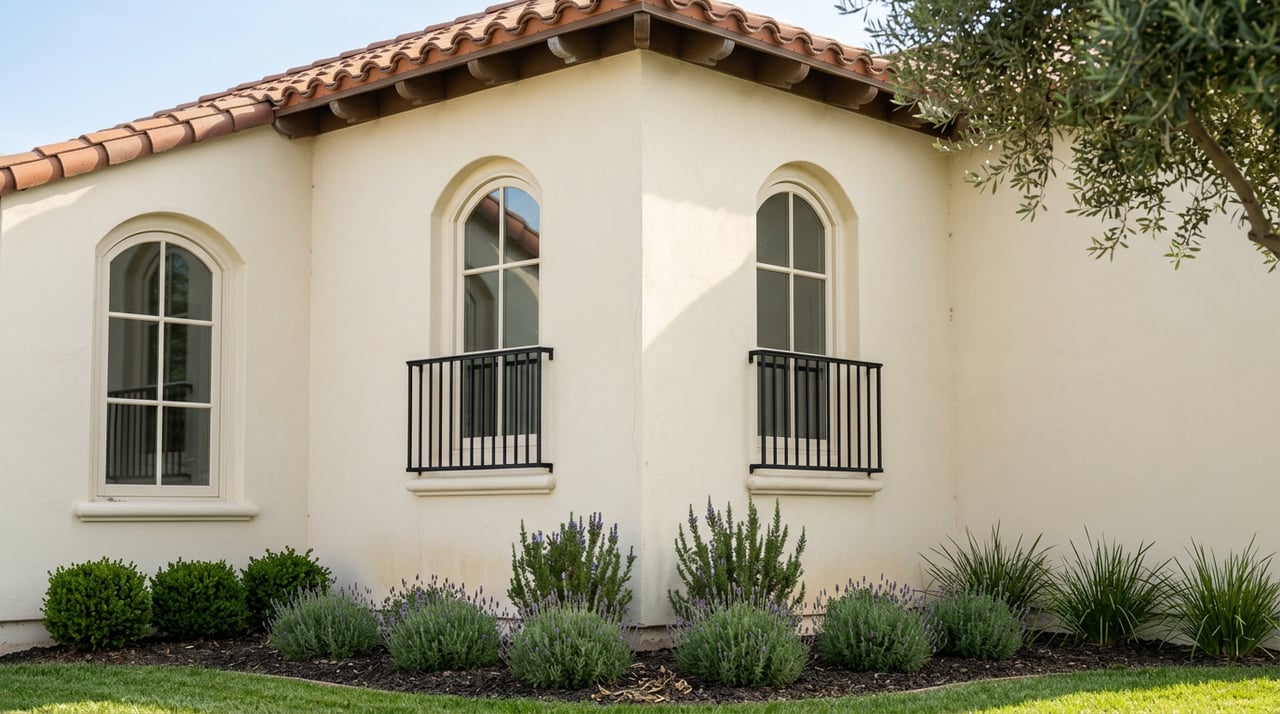
The Turlock median looks calm on the portals. Sit with the numbers for a minute and a different picture shows up: two markets running at different speeds inside the same city limits, on the same MLS, sometimes on the same street.
Buyers who treat Turlock like a single average are writing offers for the wrong market. Sellers who anchor to a neighbor's July closing are pricing for a market that no longer exists three streets over. The gap between what a home lists for and what it actually sells for is doing quiet work in 2026, and it deserves a closer look.
The number that doesn't match the other number
Pull two portals up side by side and the discrepancy jumps out. As of July 2026, Movoto pegged the median Turlock list price at $550,000 with homes sitting a median of 44 days on market. Redfin, working from closed sales, reported a median sale price of $465,000, down 1.5% year over year. Zillow's home value index sat lower still, at $461,563, down 2.7% over the past year, with homes going to pending in around 9 days.
Three data feeds. Three different stories. The $85,000 gap between the list-price median and the sale-price median isn't a rounding error. It's the fingerprint of a market where some homes clear fast at or above ask while others linger, cut price, and eventually close well below where they started.
| Source (Turlock, 2026) | Metric | Value |
|---|---|---|
| Movoto, July 2026 | Median list price | $550,000 |
| Redfin, Dec 2025 close | Median sale price | $465,000 |
| Zillow ZHVI, mid-2026 | Typical home value | $461,563 |
| Redfin | Days to pending (hot homes) | ~9–12 |
| Movoto, July 2026 | Median days on market | 44 |
Two markets, one ZIP code
The Redfin data lays the split out cleanly. In an average month, many homes get multiple offers, some with waived contingencies; the average home sells for about 1% below list and goes pending in around 32 days, while hot homes sell at about list and go pending in around 9 days. That's a bimodal distribution, not a normal one. There isn't really a "typical" Turlock home right now. There's a fast lane and a slow lane, and the median sits in a space very few actual houses occupy.
Houzeo's read of the same market adds texture. In their February 2026 snapshot, the sale-to-list ratio was 97.33%, roughly a third of homes sold above asking, and about 13.5% of listings took a price reduction before closing. Read that carefully. One in three homes is competitive enough to draw an over-ask offer. One in seven has to publicly cut price to move. That's a market picking winners and losers by list quality, not by neighborhood alone.
Where the fast lane runs, and where it doesn't
Named subdivisions in Turlock behave differently. Movoto's July 2026 neighborhood list ran through the usual established names: Daubenberger Estates, Peacock Ranch Estates, Sundance Lake, Bristol Park, Sereno, River Pointe, Patterson Ranch, Naraghi Lakes, Regency Park, Balboa Park, Cedar Brook, and Timberlake, among others. What the aggregators don't tell you is which of those pockets are moving in a week and which are drifting toward the 60-day mark.
A few local dynamics shape that split:
- New construction has its own price floor. Builders like KB Home operate in Turlock, and Juniper Meadows by Stonefield Home advertises models starting as low as $254,000. Entry-level new builds compete with older stock priced in the same band, which pulls closing prices down on tired resales.
- CSU Stanislaus anchors rental demand. The university serves nearly 10,000 students across its Turlock and Stockton campuses and is designated as a Hispanic-Serving Institution by the U.S. Department of Education. Investor demand for homes within a reasonable radius of campus keeps a floor under three-bedroom sub-$450K product even when the broader market cools.
- Newer stock in west and northeast pockets tends to move faster than older interior blocks, partly because it hits the market already staged and inspection-clean. Slow-lane homes tend to be older, priced against comps from six months ago, and sold as-is.
What this changes about your offer
If you're a buyer reading the $465K sale-price number and assuming you can bid $450K on a well-priced $475K home, you're going to lose. If you're reading the $550K list-price number and worrying you can't afford Turlock, you're probably looking at asking prices that will end up closing lower. Both readings are wrong for different reasons.
A more useful playbook, given the split:
- Ask your agent for the sale-to-list ratio on the specific street and product type, not the citywide number. A three-bed ranch in one pocket is running a different ratio than a four-bed two-story in another.
- Read the days-on-market history carefully. A home that relisted after a canceled contract reads as "new" on the portals. The clock has actually been ticking longer.
- Watch for the price cut as a signal, not a reason to lowball. With about 13.5% of Turlock listings taking a price reduction, a reduction usually means the seller has moved from the fast lane to the slow lane. There's room to negotiate, but the ceiling on your discount is set by the next comparable, not by the original list.
- Budget for the appraisal gap on hot-lane homes. If a third of homes are closing above asking, appraisals are lagging the market on the top end. Buyers who need financing should know their gap-coverage tolerance before writing.
- Sellers should price to the fast lane or accept slow-lane math. Homes listed 5–8% above the correct number rarely "test the market" successfully in this environment. They tend to sit, then cut, then close under where a sharper initial price would have landed them.
The supply story behind the split
Turlock isn't overbuilt, and it isn't going to be soon. The city is required by state law to plan for at least 5,802 new housing units over the next eight years under its current Housing Element cycle. Meeting that number in a market where entitlements move slowly means most 2026 buyers will still be competing over the same finite pool of resale stock while pipeline projects work their way through review.
Commercial and mixed-use activity is moving alongside residential. Oak Park Plaza, a proposed commercial center on 3.4 acres at the northeast corner of Fulkerth Road and Tully Road, was approved on April 3, 2026. Projects like that reshape drive-time value for nearby subdivisions in ways the portals don't reflect for months.
There's a longer-horizon signal worth watching too. Stanislaus State's proposed Tracy satellite campus, part of the Pacific Gateway master plan, could break ground by late 2026, with an anticipated opening in 2028. That expansion doesn't take students away from the Turlock campus, and it strengthens the argument that CSU Stanislaus remains the durable employer anchoring local demand.
FAQ
If the median sale price is down, is Turlock a buyer's market? Not really. Houzeo's read showed homes moving in just 20 days, inventory at 1.67 months of supply, and properties selling for 97.33% of asking. Under 45 days on market and under three months of supply both lean seller. The price softening reflects buyer discipline on stale listings, not a broad handover of leverage.
Do the different portal medians mean one of them is wrong? No. Each is measuring a different thing. List medians count what's currently for sale, sale medians count what closed, and index values weight the full stock of homes. In a bifurcated market like Turlock in 2026, those numbers spread apart more than they do in a boring market. The gap itself is the data.
Where does new construction fit? It's a parallel track. Builders set price, offer incentives on rate buydowns, and don't have to negotiate against inspection reports the same way a resale seller does. If you're weighing a Juniper Meadows floor plan against a 20-year-old resale at the same price, the decision isn't really about price. It's about maintenance risk, yard size, and how much of your closing budget the builder is covering.
Working the split
The buyers and sellers who do well in a two-speed market are the ones who stop looking at one number and start reading the shape of the distribution. That takes a local read on which streets are running hot, which listings are quietly stalled, and which price bands are seeing the most bidding pressure this week, not last quarter.
If you're weighing a move in or out of Turlock, or trying to price a home into the fast lane on the first Saturday it hits the MLS, Oliveira Properties can walk the specific comps with you and pressure-test the numbers before you write or list. Curious what your home would actually clear at today? Get Your Free Home Valuation.