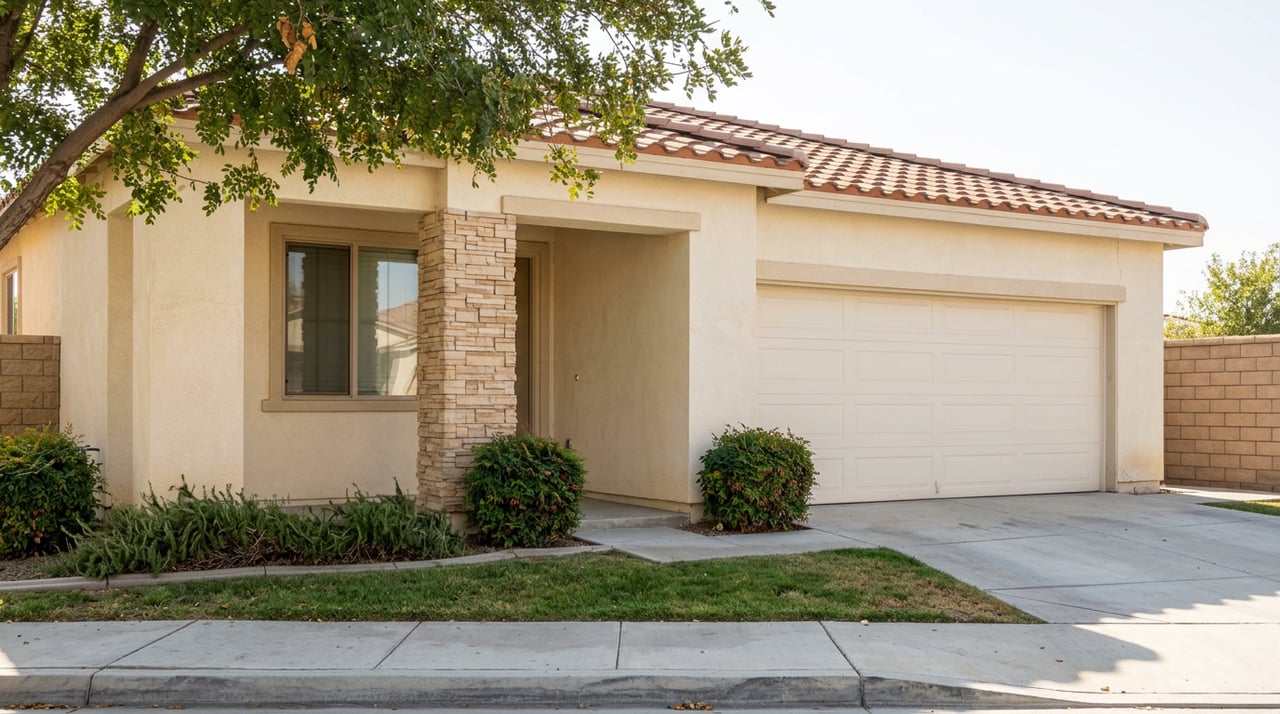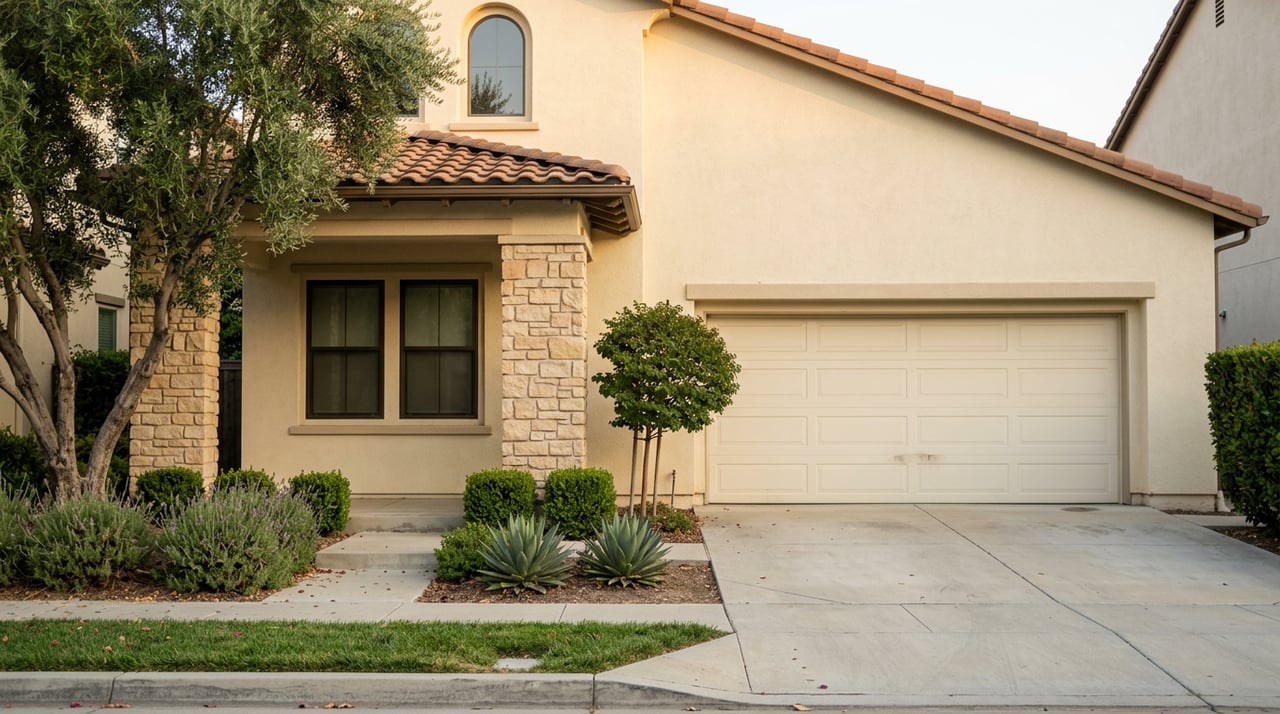
If you've been tracking Santa Clara home prices on any of the big portals, you've probably seen the same number moving in the same direction: down. City-level data from Redfin shows the median sale price fell 3.5% year over year, to $1.7 million, over the three months ending May 2026. That looks like a cooling market. A buyer scanning that headline might reasonably expect a little more room to negotiate on a single-family home in Santa Clara this year.
They'd be wrong, and the reason why is worth understanding before you write an offer or decide this city isn't worth the fight.
The number that doesn't match the other number
Here's what the median price doesn't tell you: over that same three-month window, the median price per square foot in the city of Santa Clara actually rose 5.4%, to $1,110 per square foot. Homes sold in an average of 12 days, drew about four offers each, and the city's Redfin Compete Score sat at 91 out of 100, among the most competitive readings the metric produces.
A falling median and a rising price per square foot cannot both mean "values are dropping." What's actually happening is a shift in what's selling, not a shift in what things are worth. When more of the closed sales in a given month are smaller homes or condos instead of larger detached houses, the median moves down even though buyers are paying more per square foot for whatever they do get. It's the same trick that makes a company's average employee salary drop the moment it hires ten interns, without anyone's individual pay being cut.
So the real question isn't "is Santa Clara cooling." It's "which part of Santa Clara's housing stock is actually dragging that median down." The answer points somewhere specific.
Two markets wearing one median
Countywide data for June 2026 makes the split obvious. Single-family homes and condos in Santa Clara County are behaving like two separate markets that happen to share a zip code.
| Segment | Median sale price (June 2026, YoY) | Days on market | Months of supply |
|---|---|---|---|
| Single-family homes | $1,920,000 (down 8.6%) | 12 days | 1.6 months |
| Condos | $661,500 (down 11.8%) | 31 days, up 40.9% YoY | 4.1 months |
Single-family homes are moving faster than a month and a half of supply would suggest is even possible in a normal market. Condos are sitting more than two and a half times as long, with almost three times the available inventory relative to demand. That gap is countywide, and it lines up with what the city-specific Redfin numbers show for detached homes: rising cost per square foot, fast sales, tight supply. The segment that's actually driving the median down isn't the one most relocating buyers picture when they search "Santa Clara homes."
If you're comparing Santa Clara to another South Bay city using only the median price you saw on a portal, you're comparing a blended number that's mostly telling you about condos, in a city where the single-family competition hasn't eased at all.
Why condos are the ones sitting
Condo inventory isn't piling up because buyers stopped wanting to live in Santa Clara. It's piling up for a more specific reason: risk.
California's SB 326, the state's balcony and exterior elevated element inspection law, has pushed condo and apartment associations to complete mandatory structural inspections of balconies, decks, and walkways. For older buildings, those inspections have surfaced deferred maintenance that HOAs now have to fund, sometimes through special assessments that show up mid-escrow and change a buyer's math entirely. Buyers who once compared two condo listings purely on price and square footage are now asking about reserve funds, recent inspection reports, and pending litigation before they'll write an offer. Well-maintained buildings with clean paperwork are still moving. Buildings with open questions are the ones sitting for a month or more.
That caution shows up directly in the countywide numbers: condo days on market jumped 40.9% year over year even as median condo prices fell nearly 12%. Buyers aren't walking away from Santa Clara. They're walking away from specific buildings, and pricing that hesitation into every unit nearby.
Where the new supply is actually landing
The other half of this story is what's being built, and almost none of it is a detached single-family home.
The clearest example sits in the Clara District, the roughly 45-acre mixed-use neighborhood taking shape near Levi's Stadium on former industrial land. More than 2,200 homes have already been delivered there, with a total plan calling for about 4,500 homes plus 10 acres of parks. Construction is now underway on the district's next phase, Parkside, a 301-apartment project from Ensemble Real Estate Investments carrying roughly $190 million in investment and an expected opening in fall 2028. At the groundbreaking, Mayor Lisa Gillmor said the project matters because housing remains one of our most urgent challenges in Silicon Valley. Ensemble's Rob Gomez put the demand side plainly, noting that there were certainly people that wanted to live in the area close to their jobs, close to transit.
That pipeline isn't a one-off. On the city's west side, developers already completed the first phase of Gateway Crossings, a 725-home apartment project on the former FMC industrial site, with total plans calling for 1,565 homes across 23.8 acres once finished. And the city is now studying something bigger still: the proposed Santa Clara Station Area Specific Plan, which could bring up to 8,300 housing units and 2.1 million square feet of office space to a section of the city, with a public scoping meeting held June 29, 2026, to shape the environmental review.
Every one of these projects adds apartments and condos. None of them adds detached single-family inventory. That's the structural reason the two-speed market isn't likely to correct on its own anytime soon. The segment with soft demand keeps getting more supply. The segment with brutal competition isn't getting any.
What this means depending on what you're shopping for
- If you want a single-family home in Santa Clara, the falling median you saw online won't translate into easier terms. Price per square foot is climbing, homes are averaging 12 days on market, and multiple offers remain routine. Come in with financing fully lined up and a realistic sense of what comparable homes actually closed for, not what the citywide median suggests.
- If you're open to a condo, you're shopping in genuinely different conditions, with real negotiating room in buildings that have clean HOA financials. That room exists because other buyers are being careful, not because the location lost its appeal.
- If you're comparing Santa Clara to another South Bay city on price alone, ask which segment you're actually pricing. A city's blended median can look softer than its detached-home market really is, especially in a place adding thousands of condo and apartment units at once.
Before making an offer on any condo here, it's worth asking three things up front: has the building completed its SB 326 balcony inspection, what did that inspection find, and does the HOA have adequate reserves to cover any repairs it flagged. Those answers matter more to your final price than the listing itself.
A few questions worth asking before you compare cities
Does the falling median mean Santa Clara home values are dropping? Not for single-family homes. Price per square foot on detached homes rose 5.4% year over year as of the three months ending May 2026, even as the blended median fell. The decline is concentrated in the condo segment.
Are all Santa Clara condos affected by the same risk? No. Buildings with completed SB 326 inspections and healthy reserve funds are still selling at a reasonable pace. The slowdown is concentrated in buildings with open questions about deferred maintenance or pending assessments.
Will new construction ease competition for single-family buyers? Not based on what's currently in the pipeline. The Clara District, Gateway Crossings, and the proposed Station Area plan are all multifamily projects. None adds detached single-family inventory to a market that already has under two months of supply.
Santa Clara's numbers reward the buyer who reads past the headline. If you're weighing this city against others in the South Bay, or trying to figure out what a specific budget actually buys here in 2026, Oliveira Properties can walk you through what's really happening street by street, building by building, so you're negotiating on facts instead of a median that's telling half the story.